TL;DR:
- Effective creative leadership involves building psychological safety, practicing daily curiosity, and maintaining emotional clarity.
- These habits foster trust, innovation, and resilience, enabling teams to thrive under pressure while embracing risk and originality.
Leading a creative team is not the same as managing one. The habits for creative leaders who build cultures of real innovation are fundamentally different from standard management advice. You are responsible for holding space for risk, originality, and collaboration while still delivering results under serious pressure. Content demand has doubled in two years, and the creative professionals on your team feel it. What you do daily, how you show up, what you model, and where you focus your energy shapes everything. These nine habits are the ones that change outcomes.
Table of Contents
- Key takeaways
- 1. Build psychological safety as your foundation habit
- 2. Practice curiosity as a non-negotiable daily habit
- 3. Develop emotional clarity as a leadership practice
- 4. Balance productivity demands with creative risk-taking
- 5. Define decision ownership with precision
- 6. Model courageous behavior, not just courageous talk
- 7. Create space for honest feedback without formality
- 8. Protect your own creative energy with intention
- 9. Comparing and adapting these habits to your context
- My honest take on building these habits as a creative leader
- Ready to go deeper on your creative leadership development?
- FAQ
Key takeaways
| Point | Details |
|---|---|
| Psychological safety first | Teams with psychological safety outperform others by 27% in productivity and innovation. |
| Curiosity is a daily practice | Cross-disciplinary learning and consistent questioning habits are what separate good leaders from genuinely generative ones. |
| Emotional clarity drives trust | Leaders who understand and communicate their emotional state build teams that take creative risks more freely. |
| Productivity needs a creative counterweight | Disciplined execution and intentional pauses for idea generation must coexist, or creativity quietly dies under pressure. |
| Adapt habits to your context | No single habit works universally. The most effective creative leaders adjust their approach based on team needs and phase of work. |
1. Build psychological safety as your foundation habit
Of all the habits for creative leaders, this one has the most research behind it. Google's Project Aristotle found that psychological safety was the single most important factor in high-performing teams. Not talent, not resources, not even goal clarity. Safety.
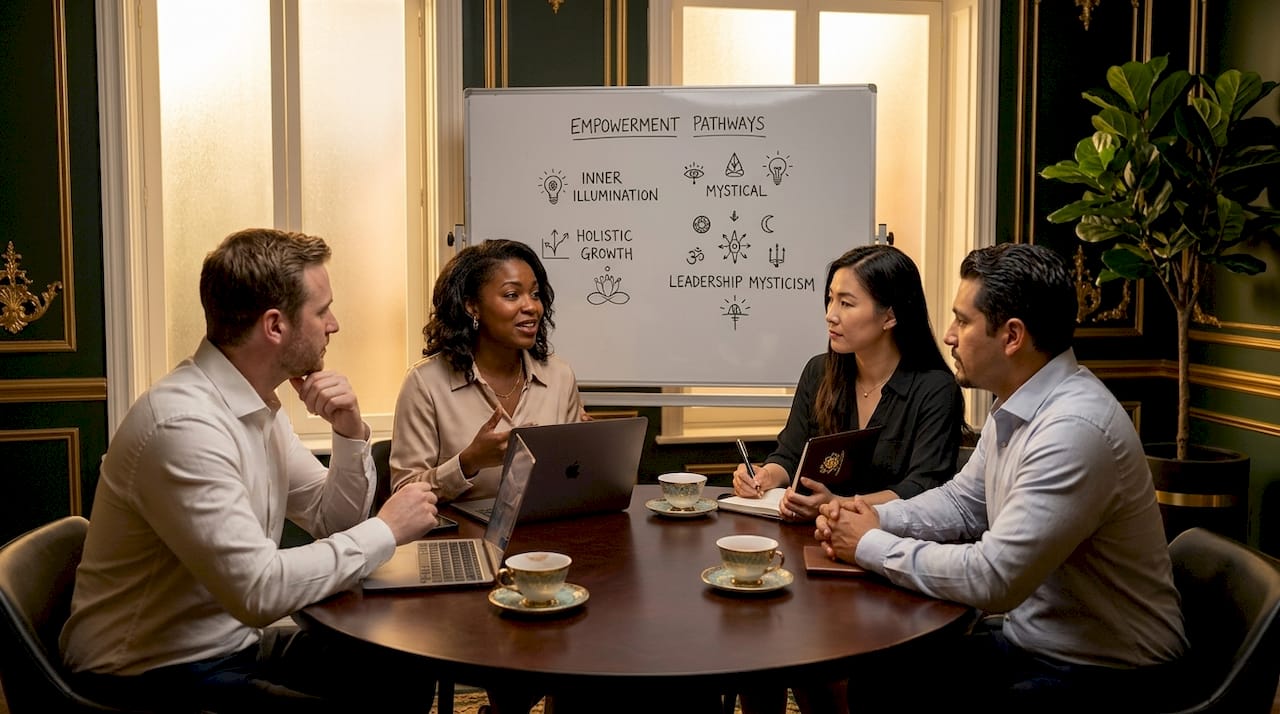
What does psychological safety actually mean in practice? It is not about making everything comfortable or avoiding hard conversations. It is about interpersonal risk-taking — the belief that you will not be punished for speaking up, sharing a half-formed idea, or admitting you got something wrong. For creative teams especially, this distinction matters. Creativity requires exposure. You cannot build a culture of originality if people are protecting themselves.
The behaviors that build safety are not grand gestures. They are small and consistent. Leaders who model curiosity and openly admit uncertainty see team input increase by 40%. That means asking genuine questions instead of performing confidence you do not have.
Pro Tip: Start your next team meeting by sharing one thing you got wrong recently and what you learned. This one act communicates more about safety than any team offsite ever will.
"Psychological safety is not about being nice. It's about creating a climate where candor and directness are possible." — Amy Edmondson
2. Practice curiosity as a non-negotiable daily habit
Curiosity is one of the most underrated creative leadership skills. Most leaders know this intellectually. Very few make it a structured practice. The difference between a leader who occasionally gets curious and one who builds it into their daily routine is the difference between incremental ideas and genuine breakthroughs.
Small habits of curiosity expand your creative borders and fuel continuous innovation. What does this actually look like on a Tuesday morning?
- Read one article per week from a field completely unrelated to your own
- Have a monthly coffee conversation with someone whose work has nothing to do with yours
- Keep a question log, not just a task list. What surprised you this week? What do you not understand yet?
- Watch how people in other industries solve the problems your industry treats as unsolvable
The leaders who apply cross-disciplinary learning consistently are the ones who arrive in creative conversations with a different quality of thinking. They make unexpected connections. They ask the question no one else thought to ask.
Pro Tip: Block 20 minutes every Friday specifically for reading something completely outside your area of expertise. Label it "curiosity time" in your calendar so it does not get displaced by deliverables.
3. Develop emotional clarity as a leadership practice
This habit is one the management world consistently undervalues. Emotional clarity is not the same as emotional expression. It means understanding your own internal state clearly enough to choose how you respond instead of simply reacting. For creative leaders, this matters enormously.
Emotional intelligence and empathic communication are among the most powerful tools for motivating creative teams. Active listening, clear articulation of what you need from people, and genuine empathy create the conditions where people feel motivated to do their best thinking, not just their most efficient work.
Research on emotional connection in creative work shows that 70% of consumer decisions are emotion-driven. The leaders who understand this build teams that produce work resonating at that level. That understanding begins with your own emotional clarity.
Practical habits that develop this skill:
- End your workday with a 5-minute reflection. What emotional state did you bring into interactions today? Where did it serve your team and where did it get in the way?
- Practice naming feelings precisely before important conversations. Not "stressed" but "frustrated by unclear expectations."
- Learn to practice self-leadership as an ongoing inner discipline, not just a crisis response.
4. Balance productivity demands with creative risk-taking
Here is where many creative leaders silently struggle. The creativity gap is real. Over 80% of marketers now update campaigns weekly, with more than a third updating daily. That pressure does not disappear just because you believe in creative work. It compounds.
The habit here is not choosing between productivity and creativity. It is building rituals that allow both to coexist without one consuming the other. True productivity for creative leaders pairs disciplined focus with intentional creative risk-taking, not just execution sprints followed by collapse.
What does that look like?
- Protect one block per week specifically for experimental work with no deliverable attached
- Separate idea generation from editing. Never do both in the same sitting.
- When AI tools are in use on your team, watch for volume escalation. Speed gains do not automatically mean better work.
Pro Tip: Introduce a "what if we tried this differently" question at the end of your project reviews. Not to derail delivery, but to signal that experimentation is welcomed even inside a structured workflow.
5. Define decision ownership with precision
One of the most overlooked habits of effective leaders in creative contexts is clarity around who decides what. Ambiguity about decision ownership creates anxiety, which is one of the fastest ways to kill creative output. When people are not sure if their ideas will be overruled, they stop offering them.
Scaling creative work requires leadership systems that define clarity, decision ownership, and governance explicitly. This is not bureaucracy. It is the infrastructure that makes creativity safe to pursue.
The practical habit: map out your creative workflow and mark each stage with a clear owner. Who can greenlight an idea? Who can pivot a direction? Who has veto power and when? When your team knows the answers to those questions, they spend less energy managing uncertainty and more energy doing the work.
6. Model courageous behavior, not just courageous talk
There is a gap in most creative leadership conversations between talking about bold moves and actually making them. Courageous leadership empowers teams by enabling decisions aligned with shared goals. That is not the same as demanding bravery from people while playing it safe yourself.
The habit of modeling courage means being willing to sponsor an idea that might fail, defend a team member's creative risk to stakeholders, and openly change your position when you get better information. It also means telling your team honestly when something was not working and naming what you would do differently.
Creative teams watch their leaders closely. They calibrate their own risk tolerance to yours. If you consistently choose the safer option, you train your team to do the same.
7. Create space for honest feedback without formality
Annual performance reviews do not build creative cultures. They document them, usually inaccurately. The habit of regular, informal feedback is what actually shapes how teams think and work together.
This means short check-ins after creative presentations. It means asking "what would have made this better" when a project lands well, not just when it misses. It means building peer feedback into your process without making it feel like an evaluation system.
The goal is to normalize the conversation around growth so thoroughly that no single feedback conversation feels high-stakes. When feedback is frequent and low-pressure, people integrate it. When it is rare and formal, people defend against it.
8. Protect your own creative energy with intention
This is the habit most creative leaders sacrifice first when things get busy. You cannot cultivate creativity in leadership while running completely on output mode. Your role requires generative thinking, and generative thinking requires recovery, input, and space.
Practical habits in this category:
- Schedule something weekly that is purely creative and has nothing to do with work. Painting, writing, cooking, building. It replenishes a different kind of thinking.
- Take your lunch break away from screens with real consistency, not as a reward for finishing tasks.
- Audit your calendar quarterly and look for where you have allowed creativity-depleting meetings to colonize your most cognitively rich hours.
Your creative energy is not a personality trait. It is a resource that can be managed, protected, and replenished.
9. Comparing and adapting these habits to your context
Not every habit belongs in every season of your leadership. The table below gives you a practical lens for deciding where to focus first.
| Habit | Primary benefit | Biggest challenge | When to prioritize |
|---|---|---|---|
| Psychological safety | Higher innovation and team trust | Requires consistent modeling over time | Always, but especially in new team formation |
| Curiosity practice | Expanding creative thinking | Easily displaced by urgent work | When team ideas feel repetitive or stale |
| Emotional clarity | Deeper trust and communication quality | Requires inner work, not just technique | During tension, transitions, or conflict |
| Productivity with risk-taking | Sustained output without creative burnout | Pressure to always deliver crowds out experiments | High-demand cycles and campaign sprints |
| Decision ownership clarity | Less anxiety, more creative confidence | Initial mapping takes time | When team creativity has slowed without explanation |
| Courageous modeling | Raises team risk tolerance | Requires personal vulnerability | When your team is holding back |
| Regular honest feedback | Faster growth and fewer repeat mistakes | Habits can drift back to formal-only feedback | Onboarding new creative staff or launching new projects |
| Protecting creative energy | Sustained generative thinking | Social pressure to stay "always on" | Anytime but non-negotiable in high-pressure periods |
Pro Tip: Pick one habit from this list and practice it daily for 30 days before adding another. Habits compound only after they are stable.
My honest take on building these habits as a creative leader
I have worked alongside women building creative teams in industries with relentless output pressure, and the habit I see most commonly deprioritized is emotional clarity. Not because leaders think it is unimportant. Because it requires turning inward, and inward work feels like it is taking time away from the actual job.
What I have learned is that the opposite is true. When I started paying genuine attention to my own emotional state before important conversations with my team, the quality of those conversations changed entirely. I stopped managing reactions and started leading with intention. The shift was not dramatic. It was quiet and cumulative.
I also want to name something that standard leadership advice usually skips: psychological safety does not feel the same for everyone on your team. For women and people who have historically been penalized for speaking up, building safety requires more than good intentions. It requires you to notice whose voices consistently get less airtime and to address that with the same attention you give creative strategy.
The most honest thing I can tell you is this: the habits that matter most are the ones that require you to be genuinely curious about your impact, not just your output. That is slower work. It is also the work that lasts.
— RachelMHarrison
Ready to go deeper on your creative leadership development?
If these habits sparked something in you, the next step is figuring out which ones are already present in how you lead and which ones need real investment. At Rachel-m-harrison, this is exactly the kind of work we do together in one-on-one coaching sessions.

The coaching guide walks you through every option available to you, from introductory resources to deeper engagement. If you already know you want personalized support, you can book a session directly and begin building the leadership habits that actually fit your life, your team, and your creative vision. Creative leadership is not a destination you arrive at. It is something you practice, and you do not have to practice it alone.
FAQ
What are the most important habits for creative leaders?
Psychological safety, emotional clarity, and consistent curiosity are the foundational habits. Research from Google's Project Aristotle identifies safety as the single most critical factor in high-performing creative teams.
How does psychological safety impact creative teams?
Psychologically safe teams outperform others by 27% in productivity and innovation. It enables candor, willingness to take creative risks, and the openness to admit and learn from mistakes.
Why is curiosity considered a leadership habit?
Curiosity practiced consistently, through cross-disciplinary reading and diverse conversations, is one of the strongest drivers of innovation in leadership. It expands thinking and surfaces connections that focused expertise alone cannot generate.
How can creative leaders balance productivity with innovation?
Pairing disciplined execution with protected time for experimentation is the key. Building micro-rituals for idea generation, separate from delivery workflows, lets creativity survive high-output periods without being squeezed out.
What does emotional clarity have to do with leadership?
Emotional clarity allows leaders to respond deliberately rather than react impulsively, which builds trust and motivates teams. Active listening and empathic communication are practical skills that grow from this foundation.