TL;DR:
- Creative journaling combines writing, art, and sensory exploration to process emotions and build self-awareness. Using techniques like the SENSE method, dialogue journaling, and mixed media encourages emotional insight and self-discovery. Visual elements and varied prompts enhance engagement, while shifting from output to play helps overcome barriers like perfectionism and fear of the blank page.
Creative journaling is the practice of combining writing, art, and sensory exploration to process emotions, spark insight, and build self-awareness. Unlike productivity journaling, it prioritizes play and inner exploration over output. Techniques like the SENSE method, dialogue journaling, and artistic mixed media each engage different brain pathways, making them far more effective for emotional processing than a plain diary entry. Whether you are new to the page or looking to refresh a stale practice, these creative journaling ideas give you a concrete, research-backed place to start.
1. What are the best creative journaling ideas to try?
The most effective creative journaling practice combines at least three distinct techniques. Using only one format leads to creative stagnation. The ideas below range from body-first writing to full artistic expression, so you can mix and match based on what your nervous system needs that day.
Embodied journaling with the SENSE method
The SENSE method is a 15–20 minute protocol with five steps: Settle, Embodied scan, Note sensations, Sit, and Express. It keeps you in a regulated state while processing difficult emotions. The key difference from standard journaling is writing from physical sensation rather than cognitive labels. Describing "a tight throat like a locked gate" instead of "I am sad" prevents emotional dissociation and keeps your nervous system grounded throughout the session.
Dialogue journaling
Dialogue journaling means writing a conversation between two parts of yourself, such as your anxious self and your wise self. This technique externalizes internal conflicts and reveals solutions that conscious thought loops tend to miss. You write both sides of the conversation without editing, letting each voice speak fully. The result often surprises you.
Append-only journaling
Append-only journaling means you never edit, delete, or reorder past entries. Every session adds to the record without revising what came before. This shifts the goal from organizing your thoughts to archiving your moments. Writers who struggle with perfectionism find this format the most sustainable long-term.
Artistic mixed media journaling
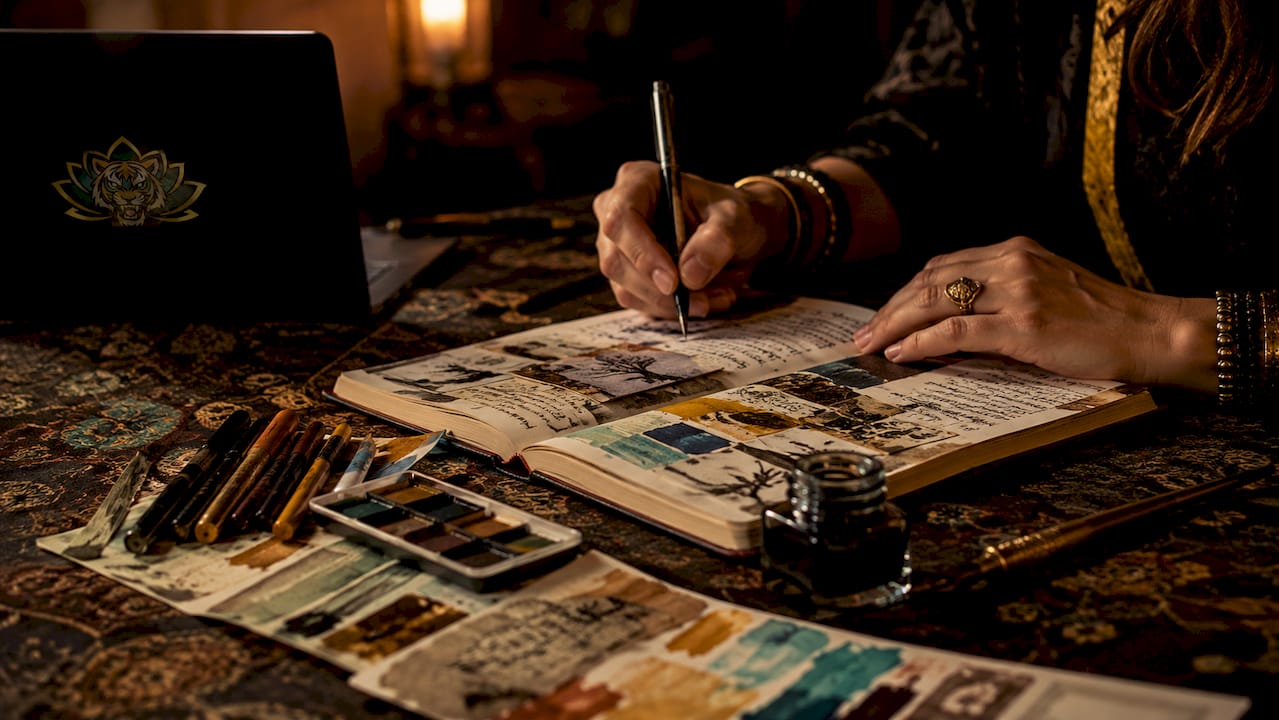
Artistic journaling integrates writing, drawing, collage, and mixed media to activate visual and tactile brain pathways. These are pathways that text-only journaling simply does not reach. You do not need artistic skill. A torn magazine image glued next to three sentences accesses a completely different layer of memory and feeling.
Interactive and intentionally messy journaling
Interactive journaling means breaking the rules of the page on purpose. Tear a corner. Write sideways. Scribble over a sentence you do not like. These methods bypass perfectionism and silence the inner critic faster than any affirmation. Beginners often quit journaling because they fear damaging a beautiful notebook. Intentional mess solves that problem immediately.
Poetry and shape-based writing
Writing in poetic form or drawing abstract shapes to represent an emotion forces you out of linear thinking. Experts recommend including poetry and drawings alongside prose to engage fresh perspectives and reduce the blank-page effect. A single shape, a spiral or a jagged line, can carry more emotional truth than a paragraph.
Pro Tip: Keep a small basket of supplies next to your journal: colored pens, washi tape, and a few magazine pages. Having them visible lowers the barrier to using them.
2. How can journal prompts for creativity spark deeper insight?
Prompts work because they bypass the "what do I write about?" paralysis. The best journal prompts for creativity are not generic. They target a specific emotional state or imaginative goal, and they invite a response in any format you choose.
Here are prompt types that consistently produce deeper insight:
- Sensation prompts. "Where in your body do you feel this emotion? Describe its texture, temperature, and weight." These ground you in the body before the mind takes over.
- Contradiction prompts. "Write about something you believe and also doubt at the same time." These surface the inner conflicts that dialogue journaling can then explore.
- Memory prompts. "Describe a moment when you felt completely yourself. What were you doing with your hands?" Sensory detail unlocks memory more reliably than abstract questions.
- Future-self prompts. "Write a letter from the version of you who has already healed. What does she want you to know right now?" This technique is particularly effective for women in transition.
- Image prompts. Paste a photograph or magazine image into your journal and write whatever it makes you feel, without explaining why.
- Resistance prompts. "What are you avoiding writing about today?" Writing the answer to that question is often the most useful session you will have all week.
Using diverse prompt formats prevents creative stagnation and promotes authenticity. The format of your response matters as much as the prompt itself. Write a poem, draw a map, or list single words. Mixing response formats keeps the practice alive across weeks and months.
Pro Tip: Write your three favorite prompts on index cards and shuffle them before each session. Random selection removes the decision fatigue that kills consistency.
3. What role do visual and artistic elements play in creative journaling?
Visual elements do more than make a journal look appealing. They engage neural pathways that writing alone cannot reach, which is why artistic journaling inspiration often unlocks emotions that words have been circling for months.
Color psychology and mood pages
Color-based mood pages and emotion wheels link colors with feelings visually, creating a record of emotional patterns over time. Assign a color to each dominant feeling and fill a page with that color using markers, paint, or torn paper. Reviewing a month of color pages gives you a visual map of your emotional life that no word count can replicate.
Collage and memory maps
Collage uses magazine images, printed photos, and found paper to represent feelings and goals without requiring you to name them directly. A memory map takes this further by arranging images spatially, placing the past on one side and the present on the other, or mapping relationships between people and events. Both methods engage the right hemisphere of the brain, which processes pattern and meaning rather than sequence and logic.
Abstract shapes and emotion drawing
Drawing abstract shapes to represent an emotion is one of the fastest ways to access feelings that resist language. A tight, angular shape might represent anxiety. A soft, expanding circle might represent safety. You do not interpret the shape immediately. You sit with it, then write whatever surfaces. This sequence, draw first, write second, consistently produces more honest entries than writing alone.
Pro Tip: Try a "color before words" rule for one week. Before writing a single sentence, fill a corner of the page with whatever color matches your current state. Notice how it changes what you write.
4. How to overcome common barriers to creative journaling
The most common reason people stop journaling is not lack of time. It is the pressure to do it correctly. Creative journaling shifts focus from productivity to play, which lowers cortisol and encourages the flow states where real insight happens.
Here are the barriers that come up most often, and what actually works:
- Fear of the blank page. Start with a shape, not a sentence. Draw a circle in the center of the page and write one word inside it. That is your entry point.
- Perfectionism about handwriting or art. Use the append-only rule. Nothing gets erased. Imperfect entries count as much as polished ones.
- Running out of things to say. Switch formats. If prose has dried up, write a list. If lists feel flat, paste an image and respond to it.
- Feeling like journaling is self-indulgent. Playful journaling supports emotional wellness and sustainable creative habits. Processing emotion on the page reduces the cognitive load you carry into every other area of your life.
- Inconsistency. Tie journaling to an existing habit, morning coffee, evening tea, or a weekly walk. Five minutes of genuine engagement beats an hour of forced writing every time.
The reflection exercises for creatives at Rachel-m-harrison offer structured starting points for writers who need a framework before they can feel free within it. Structure and freedom are not opposites in creative journaling. Structure is the container that makes freedom possible.
Key Takeaways
Creative journaling works best when it combines embodied techniques, visual elements, and varied prompt formats rather than relying on a single approach.
| Point | Details |
|---|---|
| Use the SENSE method | A 15–20 minute body-first protocol that keeps you regulated while processing emotion. |
| Try append-only journaling | Never editing past entries removes perfectionism and builds a sustainable practice. |
| Add visual and artistic elements | Color, collage, and abstract shapes engage brain pathways that writing alone cannot reach. |
| Rotate prompt formats | Mixing sensation, memory, and image prompts prevents stagnation and deepens insight. |
| Shift from output to play | Treating journaling as exploration rather than productivity lowers stress and sustains the habit. |
Why I think most journaling advice misses the body entirely
Most journaling guides tell you to "write freely" and trust the process. That advice is incomplete. In my experience working with women in emotional transition, the missing piece is almost always the body. When you write from cognitive labels, "I feel anxious, I feel stuck," you stay in the loop. When you write from sensation, "there is a pressure behind my sternum, a held breath that will not release," something shifts. The entry becomes a record of actual experience rather than a story about experience.
The SENSE method changed how I think about the page. It is not a writing tool. It is a regulation tool that happens to produce writing. That distinction matters enormously for anyone carrying unprocessed grief, chronic stress, or the particular exhaustion that comes from years of performing competence.
I also want to name something that most creativity guides avoid. The blank page is not the problem. The inner critic is not the problem. The real barrier is the belief that your inner life is not interesting enough to deserve a page. That belief is worth writing about directly. The emotional clarity exercises I recommend most often start exactly there, with the resistance itself as the subject.
Mixing art with words is not about making something beautiful. It is about making something true. When you draw before you write, you bypass the editor in your head. The shape on the page does not know how to lie. Let that be your entry point.
— RachelMHarrison
Creative journaling and trauma-informed support at Rachel-m-harrison
The techniques in this article are powerful on their own. For women carrying deeper emotional weight, a structured framework makes them more effective.
Rachel-m-harrison offers trauma-informed coaching built around the Sanctuary Symbolic Integration Method™, a framework that integrates somatic awareness, creative expression, and self-leadership into a single, grounded practice. If you are unsure whether coaching or therapy is the right next step, the trauma-informed coaching guide at Rachel-m-harrison explains the distinction clearly. For a practical starting point, the emotional wellness checklist gives you a concrete assessment of where you are right now.
FAQ
What is creative journaling?
Creative journaling is a practice that blends writing, art, and sensory exploration to process emotions and build self-awareness. It differs from standard journaling by prioritizing play and varied expression over structured output.
How do I start creative journaling as a beginner?
Begin with one simple technique: draw a shape in the center of a blank page, write one word inside it, and respond to that word in any format you choose. The append-only rule, never editing past entries, removes the pressure that stops most beginners.
What are the best journal prompts for creativity?
Sensation prompts, contradiction prompts, and image-based prompts consistently produce the deepest creative insight. Rotating between these formats prevents stagnation and keeps the practice engaging over time.
Can journaling help with emotional processing?
Writing from physical sensation rather than cognitive labels supports autonomic regulation and prevents the emotional dissociation that standard journaling can trigger. Techniques like the SENSE method are specifically designed for this purpose.
Do I need art skills for artistic journaling?
No artistic skill is required. Artistic journaling uses collage, color, and simple shapes to engage visual brain pathways. The goal is honest expression, not aesthetic quality.