TL;DR:
- Creative empowerment involves building nervous system regulation, daily habits, and confidence for free self-expression.
- Implementing a 90-day practice focused on consistency, reflection, and sharing helps develop authentic creative identity.
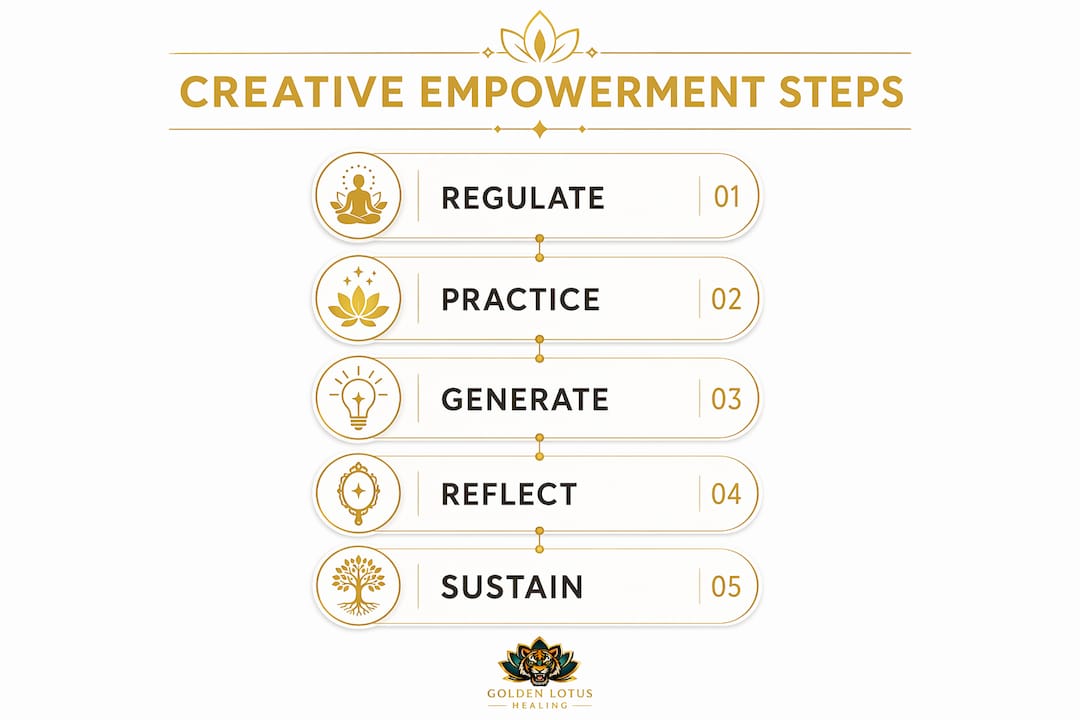
Creative empowerment is the structured process of building your creative identity, habits, and confidence so you can express yourself fully and overcome the emotional barriers that keep you silent. This guide walks you through creative empowerment step by step, drawing on the CREATE framework, the 90-day creative habit structure, and trauma-informed psychological strategies. You will learn how to prepare your nervous system, build a daily practice, generate and refine ideas, and sustain momentum through setbacks. These are not abstract concepts. They are concrete steps you can start this week.
What are the essential prerequisites for creative empowerment?
Creative empowerment begins before you pick up a pen or open a canvas. The most overlooked prerequisite is nervous system regulation. The CREATE framework identifies a "Calm" stage as the foundation of any creative practice. Without it, your body stays in a low-level fight-or-flight state, and genuine creative risk-taking becomes nearly impossible.
The practical implication is this: you need personal safety signals before you need creative techniques. Research shows that identifying cues like music, lighting, or movement reduces the stress response enough to allow creative risk-taking. For one person, that might be a specific playlist. For another, it is a 10-minute walk before sitting down to write.
Beyond nervous system readiness, two mindset shifts are non-negotiable:
- Accept imperfect progress. Small, consistent effort signals safety to your body and builds creative identity faster than occasional bursts of willpower.
- Embrace solitude. Undistracted time is not a luxury. It is the raw material of creative thought.
- Audit your environment. A cluttered, noisy, or emotionally charged space competes with your creative focus. Choose or create a space that feels neutral or calm.
- Schedule creative time. Treat it like a meeting you cannot cancel. Vague intentions do not survive a busy week.
- Start a daily journal. Even five minutes of free writing each morning clears mental noise and surfaces ideas you did not know you had.
Pro Tip: Before your first creative session, spend three minutes identifying your personal safety signal. Write it down. Use it every time you sit down to create. Consistency here is what makes the signal work.
The emotional clarity exercises Rachel-m-harrison recommends are a strong starting point for building this kind of regulated creative readiness.
How to build a daily creative habit and develop your creative identity
Consistency beats intensity every time. A 90-day creative practice built on 10–30 minutes daily plus one longer weekly session of 45–60 minutes is enough to complete and share a meaningful creative project within 12 weeks. That timeframe is not arbitrary. It is long enough to build a real habit and short enough to stay motivated.
The 90-day structure works in three phases:
- Month one: Habit formation. Show up every day, regardless of output quality. The goal is consistency, not brilliance. Document what you made, even if it feels small.
- Month two: Identity clarification. Start noticing patterns. What do you return to? What energizes you? What feels forced? These observations reveal your creative strengths and direction.
- Month three: Completion and sharing. Finish one project and share it with a trusted person. This step transforms creative practice from a private habit into a part of your identity and emotional growth.
Each month builds on the last. You are not just making things. You are becoming someone who makes things.
Pro Tip: Keep a simple log. After each session, write one sentence: what you made and how it felt. After 30 days, read back through it. You will see your creative identity forming in real time.

Small actions compound. Writing one paragraph, sketching one idea, or recording one voice memo counts. The reflection exercises Rachel-m-harrison offers are especially useful during month two, when you are trying to decode what your creative work is actually telling you about yourself.
Measuring progress matters too. Track sessions completed, not hours logged. Celebrate finishing, not perfecting. These small wins build the emotional feedback loop that keeps you returning.
What techniques help you generate, develop, and refine creative ideas?
Generating ideas is a skill, not a gift. The most effective approach combines two distinct thinking modes: divergent and convergent. Divergent and convergent thinking are two of the seven core steps in expert-defined creative development. Divergent thinking opens possibilities without judgment. Convergent thinking narrows and refines them.
The practical sequence looks like this:
- Diverge first. Set a timer for 10 minutes and write, sketch, or brainstorm without stopping. No editing. No judgment. Volume is the goal.
- Add constraints. Constraints feel limiting but actually widen your creative toolkit. Try writing with only 100 words, or creating with only materials already on your desk. Embracing constraints cultivates the playfulness necessary for sustained creative growth.
- Create messy first versions. Perfectionism is the single biggest creativity killer. Separating making from evaluating reduces perfectionism paralysis and encourages divergent ideation. Make it ugly first. Fix it later.
- Converge and refine. After the messy version exists, ask: what is working? What aligns with my values? What would resonate with the person I am making this for?
- Build your support network. Sharing early, rough work with a trusted creative peer accelerates refinement and reduces the isolation that stalls many creators.
| Technique | When to use it | What it builds |
|---|---|---|
| Timed divergent brainstorm | Session start | Volume of raw ideas |
| Constraint-based creation | When stuck or stale | Playfulness and focus |
| Messy first draft | Any new project | Momentum over perfection |
| Values alignment check | Before refining | Authenticity and direction |
| Trusted peer review | After first draft | Confidence and clarity |
The goal of this phase is not a polished product. It is a living, evolving body of work that reflects who you are and where you are going.
How do you build creative confidence and maintain momentum through setbacks?
Creative confidence is not a personality trait. It is a skill built through four specific strategies. Reflecting on past successes, learning from others, receiving encouragement, and monitoring emotional satisfaction during progress are the four core strategies identified by psychological research in 2026. Each one creates an emotional feedback loop that reinforces your belief in your own creative capacity.
Setbacks are not signs that you are not creative. They are data. Normalizing failure means treating a rejected piece or an abandoned project as iterative feedback, not final judgment. The 9 habits for creative leaders Rachel-m-harrison outlines include this reframe as a core resilience practice.
One of the most underrated momentum strategies is balancing consumption with creation. Creativity as reclaiming agency means that passive consumption without synthesis leads to creative numbness. When you feel stuck, the answer is rarely to consume more content. It is to make something, anything, from what you already know.
"Treat your creative practice as infrastructure, not inspiration. Build a repeatable system that captures what works, analyzes your process, and compounds over time. The result is a creative dividend that makes each subsequent project more efficient, more aligned, and more yours."
Creative systems outlast motivation. When inspiration fails, a system keeps you showing up. That showing up is what builds the creative confidence that no single breakthrough moment can provide.
Key Takeaways
Creative empowerment step by step requires nervous system readiness, consistent daily practice, and a structured system that builds creative confidence over time.
| Point | Details |
|---|---|
| Regulate before you create | Identify personal safety signals like music or movement to calm your nervous system first. |
| Commit to 90 days | Daily sessions of 10–30 minutes plus one weekly longer session build real creative identity. |
| Separate making from evaluating | Create messy first versions without judgment to break perfectionism and generate ideas freely. |
| Build confidence through reflection | Review past successes and track emotional satisfaction to reinforce your creative self-trust. |
| Treat practice as a system | Repeatable creative routines compound over time, producing better work with less effort. |
Why creative empowerment is really about reclaiming your voice
The conventional advice on creativity focuses almost entirely on output: make more, ship faster, produce consistently. That framing misses the deeper truth. In my work with women and creatives navigating emotional barriers, the real block is rarely a lack of ideas. It is a nervous system that has learned that self-expression is not safe.
The CREATE framework changed how I think about this. Calming the body is not a warm-up exercise. It is the work. When you signal safety to your nervous system through consistent, low-stakes creative action, you are not just building a habit. You are rebuilding trust with yourself. That is the foundation everything else rests on.
I have also seen how the consumption-creation imbalance quietly drains creative vitality. Scrolling, reading, watching, and absorbing are all passive. They feel productive, but they do not build your voice. The moment you shift from consuming to making, even imperfectly, you reclaim a kind of agency that no amount of inspiration content can give you.
The self-leadership practices I recommend are grounded in this principle. Small, consistent steps taken from a regulated nervous system will always outperform willpower-driven creative sprints. Your creativity is not broken. It is waiting for conditions that feel safe enough to show up.
— RachelMHarrison
Trauma-informed support for your creative growth
Creative blocks are often emotional blocks in disguise. When past experiences have made self-expression feel risky, standard productivity advice falls short.
Rachel-m-harrison's trauma-informed coaching is designed specifically for women and creatives who are ready to rebuild their creative confidence from the inside out. The Sanctuary Symbolic Integration Method™ helps you identify the emotional patterns keeping you stuck, regulate your nervous system, and take grounded creative action. If you are unsure whether coaching or therapy is the right fit, the trauma-informed coach guide on the Rachel-m-harrison site walks you through exactly how to decide. Your creative voice deserves a supported space to grow.
FAQ
What is creative empowerment step by step?
Creative empowerment step by step is a structured process of building nervous system regulation, daily creative habits, idea-generation skills, and creative confidence over time. It follows a progression from mindset preparation through consistent practice to sharing finished work.
How long does it take to build a creative habit?
A 90-day commitment of 10–30 minutes daily is enough to establish a consistent creative practice and complete one shareable project. The first month focuses on showing up; the final month focuses on finishing and sharing.
What is the CREATE framework?
The CREATE framework is a model for creative practice that begins with a "Calm" stage, emphasizing nervous system stabilization as the prerequisite for creative risk-taking. It treats small, consistent effort as more effective than willpower-driven creative bursts.
How do you overcome perfectionism in creative work?
Separating making from evaluating is the most direct method. Create a messy first version without judgment, then return to refine it. This two-stage approach breaks the perfectionism loop that stops many creators before they start.
How does trauma-informed coaching support creativity?
Trauma-informed coaching addresses the nervous system dysregulation that often underlies creative blocks. By identifying personal safety signals and rebuilding self-trust, it creates the internal conditions where creative expression becomes possible again.