TL;DR:
- Editorial guidance in healing involves a trauma-informed, relational approach that helps writers reclaim their voice and confidence. It emphasizes safety, pacing, and strengths-based feedback to support emotional recovery through storytelling. Oversight by qualified professionals ensures content accuracy, cultural sensitivity, and non-stigmatizing language, distinguishing it from therapy.
Editorial guidance in healing is defined as a relational, trauma-informed collaboration that helps individuals reclaim their authentic voice through structured, strengths-based writing support. This process goes beyond grammar and style. It creates a safe container where writers can process difficult experiences, rebuild confidence, and find narrative clarity. The role of editorial guidance in healing is recognized across writing centers, recovery-focused publications, and trauma-informed coaching practices, including the work of Rachel-m-harrison. When editorial support is done well, it functions as both an intellectual and emotional scaffold, one that meets writers exactly where they are.
How does editorial guidance support emotional healing through storytelling?
Editorial guidance functions as a collective act of recovery by creating spaces where writers rebuild confidence and intellectual voice. This is not a metaphor. Writing centers like the one at the University of Wisconsin-Madison have documented how allowing writers to set their own agenda produces small, cumulative moments of recognition that restore self-agency. Those moments compound over time. A writer who once felt silenced begins to trust her own words again.
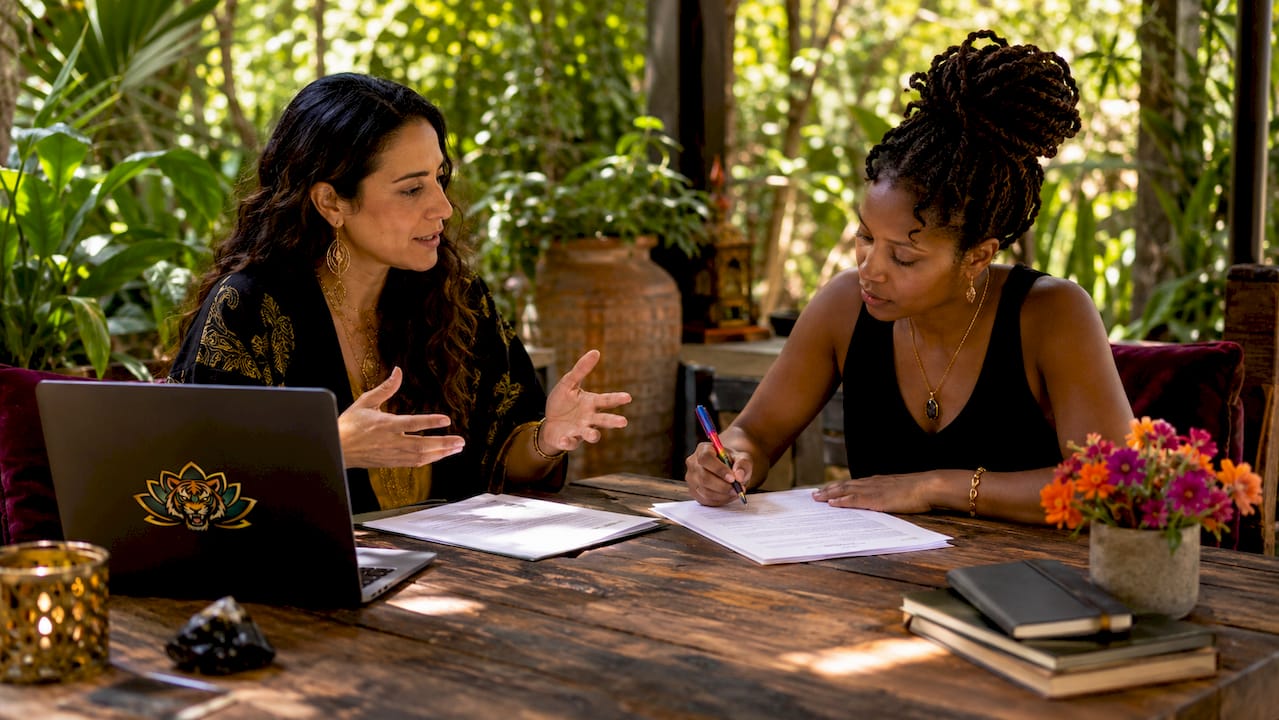
The mechanism behind this is relational. Access intimacy in editorial work means slowing the pace, listening deeply, and tailoring each interaction to the writer's current capacity. An editor who rushes feedback or imposes structure too quickly can trigger the same shutdown response that trauma originally created. Pacing is not a courtesy. It is a clinical consideration.
Strengths-based editing separates the writer from the problem and frames revision as refinement rather than failure. West Coast Editorial Associates describes this approach as building resilience by focusing on capabilities rather than deficits. The practical result is that writers who have experienced trauma stop reading red marks as evidence of their inadequacy and start reading them as invitations to grow.
Key practices that support healing through storytelling include:
- Letting the writer set the agenda. Healing requires self-direction. Editors who follow the writer's lead signal safety.
- Using open-ended questions. Questions like "What were you trying to say here?" invite exploration rather than correction.
- Naming what is working. Specific, genuine praise anchors the writer's confidence before addressing what needs revision.
- Honoring silence and pauses. A writer who goes quiet is often processing, not stuck. Waiting is part of the work.
Pro Tip: Before your first editorial session, write down one thing you want your story to do for you. That intention becomes your compass when feedback feels overwhelming.
What are the standards and oversight practices ensuring safe and trustworthy healing content?
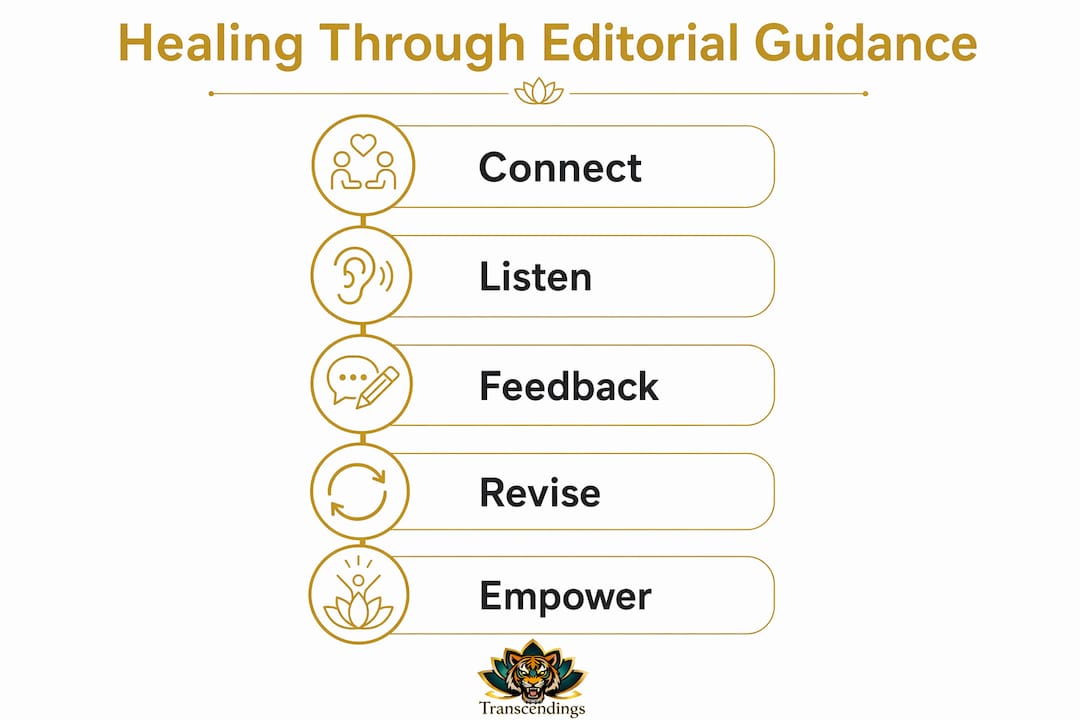
Safe healing content does not happen by accident. Recovery-focused publications use multi-layer editorial reviews involving licensed professionals and individuals in long-term recovery to verify accuracy, tone, and cultural sensitivity. Ingrained Recovery, for example, aligns its editorial standards with clinical guidelines from SAMHSA, the FDA, and the American Society of Addiction Medicine (ASAM). That alignment is not optional. It is what separates trustworthy healing content from content that causes harm.
The review process typically follows a structured sequence:
- Initial draft review by a subject-matter expert or licensed clinician to check factual accuracy.
- Language audit to remove stigmatizing terms and replace them with person-first, non-shaming language.
- Cultural sensitivity review to confirm the content does not marginalize specific communities.
- Quarterly or annual content audits to retire outdated information and update clinical references.
- Final editorial sign-off by a senior editor or medical reviewer before publication.
Human editorial oversight is indispensable in sensitive healing contexts. Research published by Springer Nature confirms that AI tools can assist with mechanical tasks but cannot replace the relational accountability that human gatekeeping provides. A human editor can recognize when a phrase, though technically accurate, will land as shaming for a reader in early recovery. An algorithm cannot.
| Review stage | Role responsible | Primary focus |
|---|---|---|
| Factual accuracy check | Licensed clinician or subject expert | Clinical correctness, safety |
| Language audit | Senior editor | Non-stigmatizing, person-first language |
| Cultural sensitivity review | Diversity consultant or community reviewer | Inclusion, representation |
| Periodic content audit | Editorial team | Currency, updated guidelines |
| Final sign-off | Medical reviewer or editor-in-chief | Overall integrity and safety |
Editorial oversight acts as a gatekeeping function that enhances clarity and prevents misinformation. In healing contexts, that clarity is not just a quality standard. It is an act of care.
How does editorial guidance differ from therapeutic interventions?
Editorial guidance and therapy share a commitment to the writer's wellbeing, but they operate in distinct lanes. Relational editing supports healing through actionable writing strategies and does not address psychological blocks directly. An editor who notices a writer shutting down can slow the pace and offer encouragement. That same editor should not attempt to process the underlying trauma. That boundary protects both the writer and the editor.
The risks of blurring this boundary are real. When an editor steps into a therapeutic role without clinical training, she may inadvertently retraumatize the writer by pushing into territory that requires professional support. Conversely, a therapist who attempts to edit a manuscript without editorial training may prioritize emotional safety at the expense of the writer's actual goals. Each role has its own expertise.
Editors working in trauma-informed spaces should hold the following distinctions clearly:
- Editors address the writing. They respond to structure, voice, clarity, and craft.
- Therapists address the psyche. They work with patterns, beliefs, and emotional processing.
- Editors can notice emotional responses. They can name them gently and refer the writer to appropriate support.
- Editors do not diagnose or treat. Any language that implies clinical assessment crosses the boundary.
Pro Tip: If a writing session brings up emotions that feel too large for the page, pause. Write the feeling down in one sentence, then step away. That sentence is not a failure. It is a signal that deeper support may serve you.
Practitioners like those featured in The Editors' Weekly emphasize that maintaining clear role distinctions actually deepens the editorial relationship. When a writer knows her editor will not try to be her therapist, she can bring more of herself to the page without fear of the session becoming something she did not sign up for. That clarity is itself a form of safety.
What practical steps can individuals take to benefit from editorial support?
Seeking editorial support for healing is a specific kind of decision. It requires finding an editor whose approach matches your needs, not just your genre. Editors who ask open-ended questions model curiosity rather than judgment, and that distinction matters enormously for writers processing trauma. Look for editors who describe their work in relational terms, who mention pacing, safety, or strengths-based feedback in how they present their services.
Setting a personal agenda before each session is one of the most underused tools in editorial collaboration. Writers who arrive with a clear intention, even a simple one like "I want to understand why this section feels flat," give their editors a starting point that honors the writer's own insight. That self-direction is part of the healing.
Practical steps for engaging with editorial support effectively:
- Research trauma-informed editors or writing coaches who explicitly name their approach. Rachel-m-harrison's editorial support for writers is one example of a practice built around emotional safety and voice recovery.
- Set a session goal before you arrive. One clear intention is more useful than a list of anxieties.
- Ask your editor how they give feedback. A strengths-based editor will describe a process that begins and ends with what is working.
- Give yourself recovery time after sessions. Editorial work that touches real experience can be tiring. Plan for it.
- Build the relationship gradually. Trust in an editorial relationship grows the same way trust grows anywhere: through consistent, respectful interaction over time.
Women writers and creatives exploring editorial guidance coaching will find that the most effective editors treat the writing and the writer as inseparable. That is not a soft sentiment. It is a practical truth about how voice recovery works.
Key Takeaways
Editorial guidance in healing works because it combines relational safety, strengths-based feedback, and clear role boundaries to help writers reclaim their voice without retraumatization.
| Point | Details |
|---|---|
| Editorial guidance is relational | Effective editorial support prioritizes pacing, listening, and writer self-direction to build safety. |
| Strengths-based feedback builds resilience | Framing revision as refinement, not failure, helps vulnerable writers regain confidence and stay engaged. |
| Oversight standards protect writers | Multi-layer reviews aligned with SAMHSA and ASAM guidelines keep healing content accurate and non-stigmatizing. |
| Editorial work is not therapy | Editors address writing strategies; therapists address psychological patterns. Clear boundaries protect both parties. |
| Practical engagement matters | Setting session intentions and choosing trauma-informed editors accelerates voice recovery and emotional clarity. |
What I know about editorial kindness that most guides leave out
Working with women who are trying to put their stories on the page has taught me one thing above all others: the moment a writer feels seen by her editor is the moment the real work begins. Not the grammatical work. The work of believing her story is worth telling.
Most editorial frameworks focus on craft. They teach structure, voice, and revision. Those things matter. But for a writer who has survived something, the first question is never "Is this well-written?" It is "Is it safe to say this at all?" An editor who understands that question, who holds it with care before touching a single sentence, changes what is possible for that writer.
I have seen women arrive at editorial sessions with manuscripts they have been sitting on for years. Not because they lacked skill. Because they lacked a witness. The self-clarity that comes through reflection is not separate from the editorial process. It is woven through it. Every time an editor names what is strong in a piece of writing, she is also naming what is strong in the person who wrote it.
The editorial relationship, when it is done with intention, is one of the quietest and most powerful forms of healing available to women who write. Not because editors are therapists. Precisely because they are not. They hold a different kind of space, one that is about the work and, through the work, about the writer herself.
— RachelMHarrison
Trauma-informed coaching as a complement to editorial support
Editorial guidance opens the door to voice recovery. Trauma-informed coaching helps you walk through it with your whole self intact.
Rachel-m-harrison offers trauma-informed coaching designed specifically for women, creatives, and leaders who are rebuilding emotional clarity and self-trust. If you have been working with your story on the page and find that deeper patterns keep surfacing, coaching provides the structured support to address those patterns with care. One question worth sitting with: do you need an editor, a coach, or both? Rachel-m-harrison's guide on trauma-informed coach vs. therapist helps you make that distinction clearly, so you can choose the support that actually fits where you are right now.
FAQ
What is editorial guidance in healing?
Editorial guidance in healing is a trauma-informed, relational collaboration that helps individuals rebuild their voice and narrative clarity through structured writing support. It combines strengths-based feedback with careful pacing to create a safe space for emotional expression.
How does editorial support differ from therapy?
Editorial support focuses on writing strategies, voice, and craft. Therapy addresses psychological patterns and emotional processing. The two approaches are complementary but distinct, and maintaining that boundary protects both the writer and the practitioner.
What makes an editor trauma-informed?
A trauma-informed editor prioritizes pacing, listens deeply, uses open-ended questions, and frames feedback around the writer's strengths rather than deficits. She follows the writer's lead and recognizes when emotional responses signal a need for additional support.
Can editorial guidance help with trauma recovery?
Editorial guidance supports trauma recovery by creating cumulative moments of recognition that restore self-agency and confidence. Writing centers like the one at the University of Wisconsin-Madison document this process as a collective act of recovery that rebuilds intellectual voice over time.
How do I find a trauma-informed editor or writing coach?
Look for editors who explicitly describe relational, strengths-based, or trauma-informed approaches in their work. Ask directly how they structure feedback and whether they have experience working with writers processing difficult experiences. Rachel-m-harrison's writing and editorial support is one resource built around these principles.